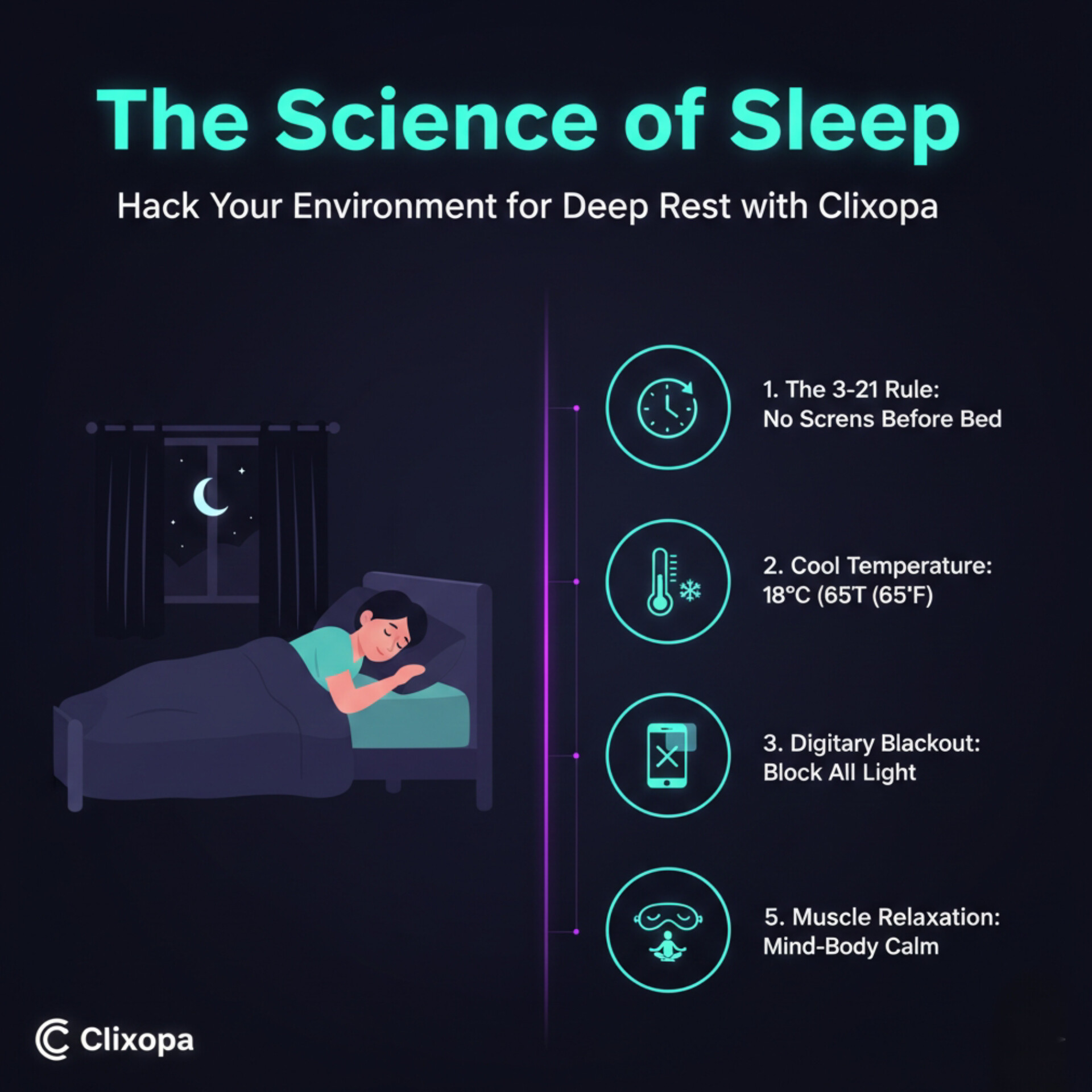
Sleep isn’t just downtime; it’s when your brain processes the emotional weight of the day. At Clixopa, we know that poor sleep often leads to increased anxiety. To help you find your inner calm, we’ve gathered the most effective strategies to turn your bedroom into a recovery sanctuary.
1. The 3-2-1 Rule
To prepare your mind for the "off" switch, follow this simple countdown:
* 3 Hours before bed: Stop eating heavy meals.
* 2 Hours before bed: Stop working or intense mental tasks.
* 1 Hour before bed: No blue light (phones, tablets, or TVs).
2. Temperature Optimization
Your core body temperature needs to drop to initiate sleep. Science suggests the ideal room temperature for deep rest is approximately 18°C (65°F). A cool room signals to your brain that it is time to produce melatonin.
3. The Digital Sunset
Blue light suppresses melatonin production more than any other wavelength. If you must use a screen, enable "Night Shift" mode. Better yet, use that final hour to engage with a calming Clixopa dialogue to vent any lingering stress from the day, ensuring you don't take your worries to bed.
4. Sensory Blackout
Even small amounts of light from chargers or street lamps can disrupt your sleep cycle. Use blackout curtains and consider an eye mask.
5. Progressive Muscle Relaxation
Once in bed, try this: Tense each muscle group for 5 seconds and then release. Start from your toes and work your way up to your face. This physical release often triggers an immediate mental shift into "Rest and Digest" mode.
Deepen Your Practice:
Consistent sleep is the foundation of emotional strength. To learn more about managing the thoughts that keep you awake, read our guide on Calming Anxiety Instantly.
Click Here To Chat With Clixopa
Community Voices