In our "always-on" culture, it is easy to mistake chronic exhaustion for a high work ethic. But burnout isn't just being tired; it is a state of emotional, physical, and mental exhaustion caused by excessive and prolonged stress. At Clixopa, we help you identify the "red zone" before you hit it.
1. The Three Dimensions of Burnout
The World Health Organization (WHO) defines burnout through
three specific signs:
* Exhaustion: Feeling physically and emotionally drained every single morning.
* Cynicism: Feeling increasingly detached or negative toward your work and colleagues.
* Reduced Efficacy: Feeling like you are no longer capable of performing your tasks, leading to a sense of failure.
2. The Role of "Cognitive Load"
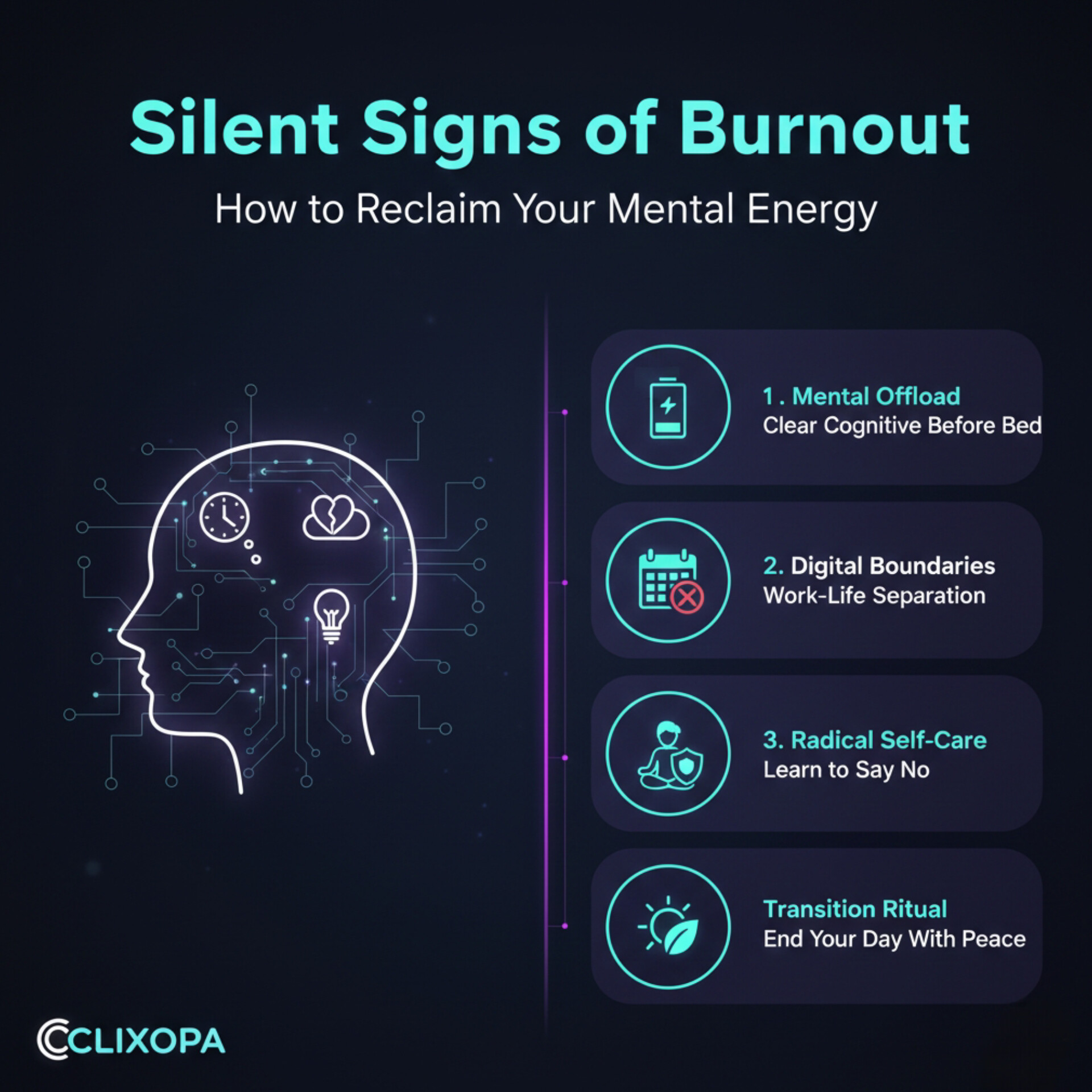
Your brain has a limited amount of processing power. When you juggle too many tasks without downtime, your "RAM" fills up, leading to brain fog. Clixopa suggests a "Mental Offload" session every evening—write down your stressors in a judgment-free dialogue to clear your cognitive space for the next day.
3. Setting "Digital Boundaries"
Burnout thrives when there is no clear line between "Work" and "Home"
* Action: Disable work notifications after 6:00 PM.
* Action: Use a "transition ritual"—a 5-minute walk or a quick Clixopa check-in—to signal to your brain that the workday is officially over.
4. Radical Self-Care vs. Basic Maintenance
Self-care isn't just about bubble baths. It’s about saying no. Reclaiming your energy requires setting boundaries that protect your peace. Remember, you cannot pour from an empty cup.
Start Your Recovery:
Burnout recovery starts with small, consistent habits. Check out our 10-Minute Morning Routine to start your next day with intention rather than anxiety.
Click Here To Chat With Clixopa
Community Voices